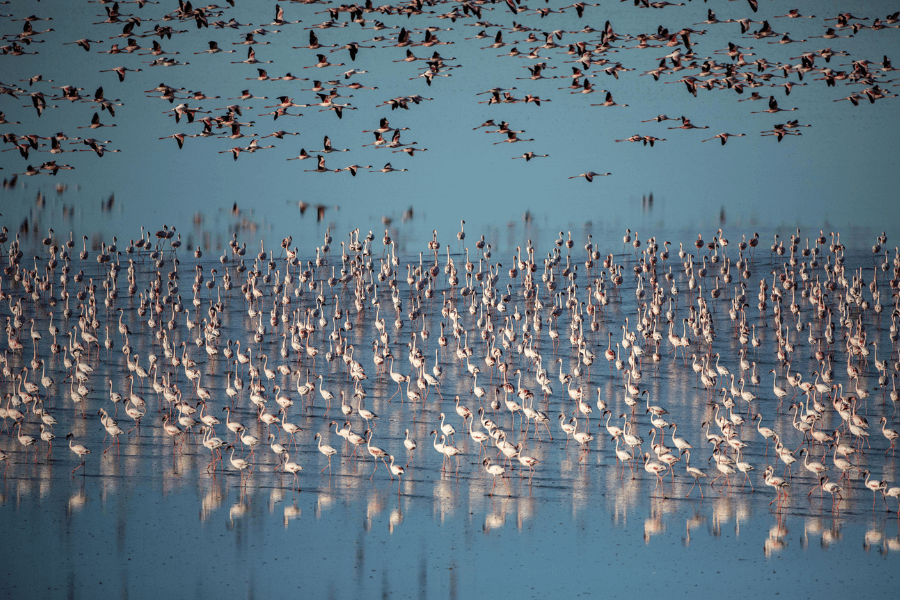
Flat, open and full of Africa’s classic animals, Botswana is ideal country for helicopter safaris. Its most famous destinations – the Okavango Delta, the Makgadikgadi Pans, the Kalahari – sit under clear skies for most of the year and it’s only in the air that you fully appreciate their enormous scale and the secrets that lie in them: long lines of migrating zebra, a huge herd of elephants, ten thousand flamingos.
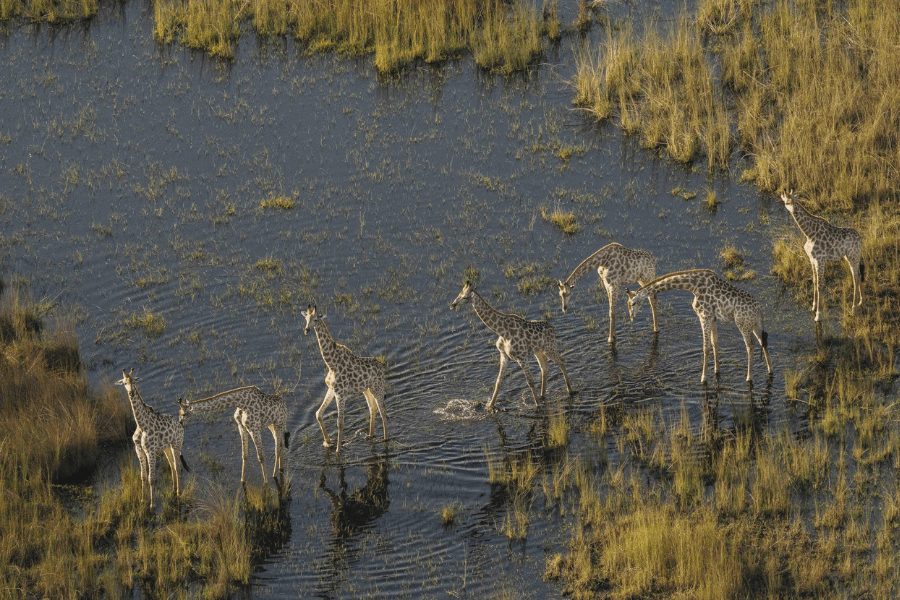
Botswana’s big distances are also best negotiated by helicopter, and it is an attractive option to fly by helicopter throughout your whole itinerary. Transfers between camps are nearly always by air anyway (light aircraft are used) but a helicopter transfer between camps operates at wildlife viewing height for potential sightings and you’ll be provided with headsets for communication with your pilot for a guided experience.
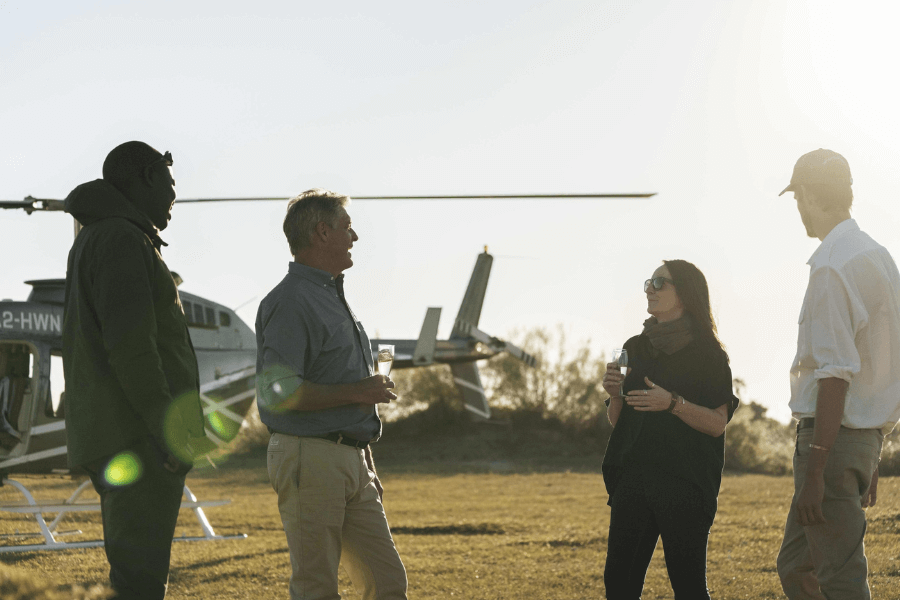
Wildlife viewing by helicopter has long been an option in the Okavango Delta, often enjoyed during the time between scheduled morning and afternoon activities, or at the expense of one in order for photographers to gain those golden hours of early morning and late afternoon light. But a wider range of helicopter activities is now available: here are our favourite ones.
DOORS-OFF SCENIC FLIGHTS
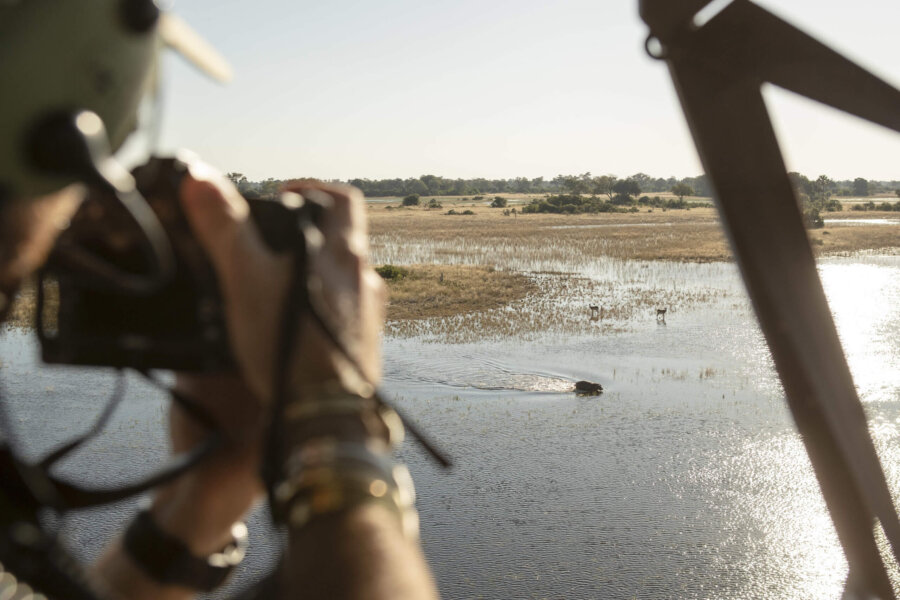
The helicopter doors might be off but you are firmly strapped in: the views of the Okavango Delta are now unfettered and unique sightings of wildlife lie below you. Scenic flights are private and flexible – you decide when you want to fly, and with options from one hour to forty five or even thirty minutes, it is easy to build a flight into your day and not miss out on any other excursion.

And if you have something special in mind, a champagne experience is easily built into a scenic flight: your pilot will stop off on a deserted palm island – seriously! There are plenty of them in the Okavango Delta – and chilled bubbly is popped for you.
FILM & PHOTO
Photography might be your profession or your hobby but either way, you’ll need to get into the air for the iconic imagery of the Okavango Delta and Botswana’s other wildlife destinations. Besides the achingly beautiful scenery, there are amazing wildlife spectacles to find. Thousands of zebras, for example, migrate between the Linyanti Wetlands and the Kalahari every year, casting long shadows as the sun sits low in the sky. Tens of thousands of flamingos fly in from all over southern Africa to gather in the Makgadikgadi Pans to breed – it’s ideal material for film-makers and wildlife photographers.
OKAVANGO DELTA & TSODILO HILLS
Not far from the lush greenery of the Okavango Delta lie an extraordinary set of hills. Jutting out of the flat Kalahari, the Tsodilo Hills are adorned with some of the finest examples of San rock art in southern Africa, making it a UNESCO World Heritage Site.
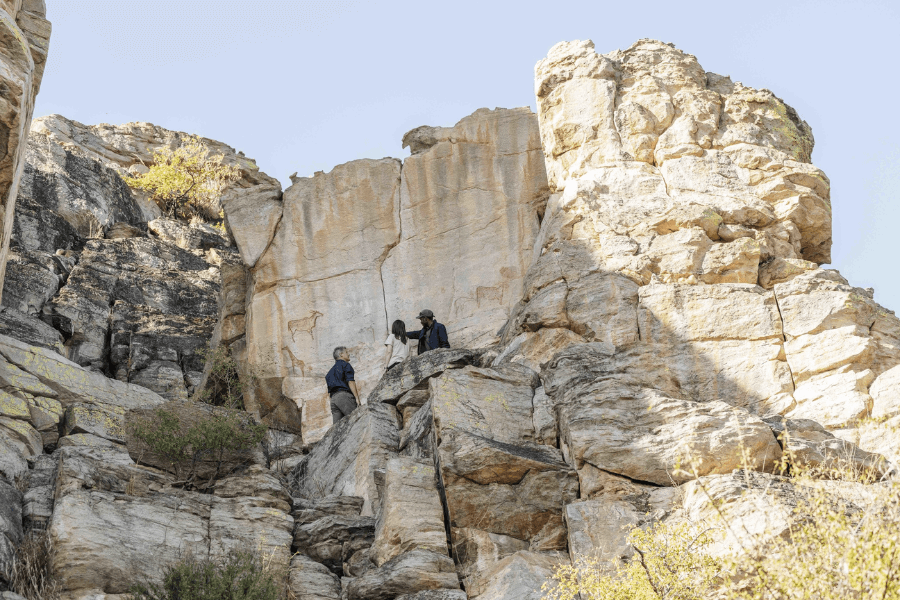
Flying in by helicopter, you’ll be met and shown around by a local professional guide, and learn some of the stories behind the paintings: they show animals and humans but also geometric shapes, and they were made by finger-painting instead of brushes, a technique unique to the region. Return to camp via a scenic flight over the Okavango Delta, combining wildlife viewing with a fascinating piece of prehistory.
ELEPHANT HAVEN
Home to a third of Africa’s elephants, Botswana plays the most vital of roles in the preservation of this animal, and nowhere is this more evident than at Elephant Haven. Fly to the edge of the Okavango Delta and visit Botswana’s only elephant orphanage, dedicated to rescuing and caring for abandoned or orphaned elephants.
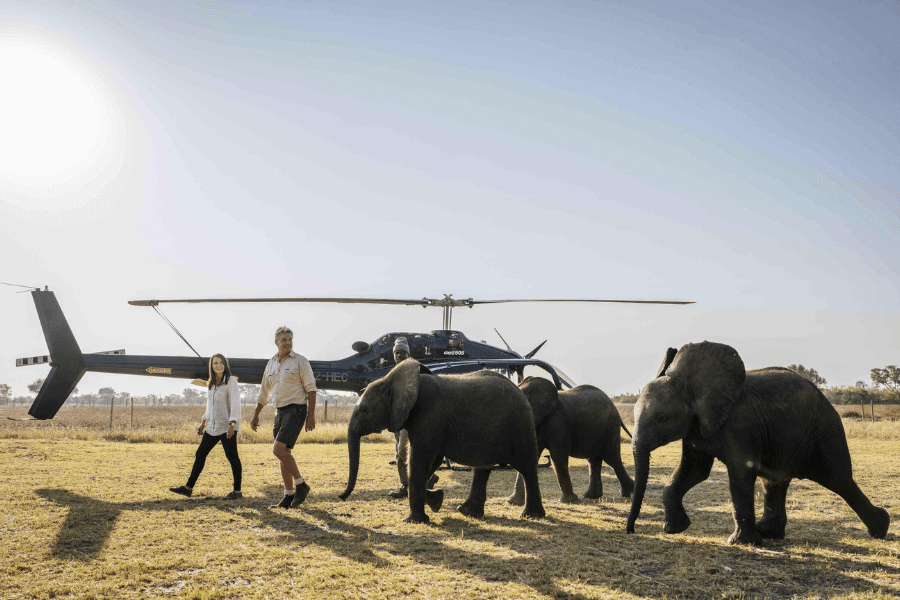
The aim of Elephant Haven is twofold: first, to re-introduce rescued elephants back into the wild to preserve the species, and second, to reduce human-animal conflict via education, awareness campaigns and practical solutions to wildlife problems. Fly in and see for yourself the work they do – and enjoy some hands-on time with the little ones!
CONSERVATION & COMMUNITY
With all this wildlife around, it’s inevitable that there is conflict in Botswana between humans and animals, whether it’s crop-raiding elephants, territorial hippos or cattle-stalking lions. This helicopter experience gives you an insight into work being taken to militate against conflict.
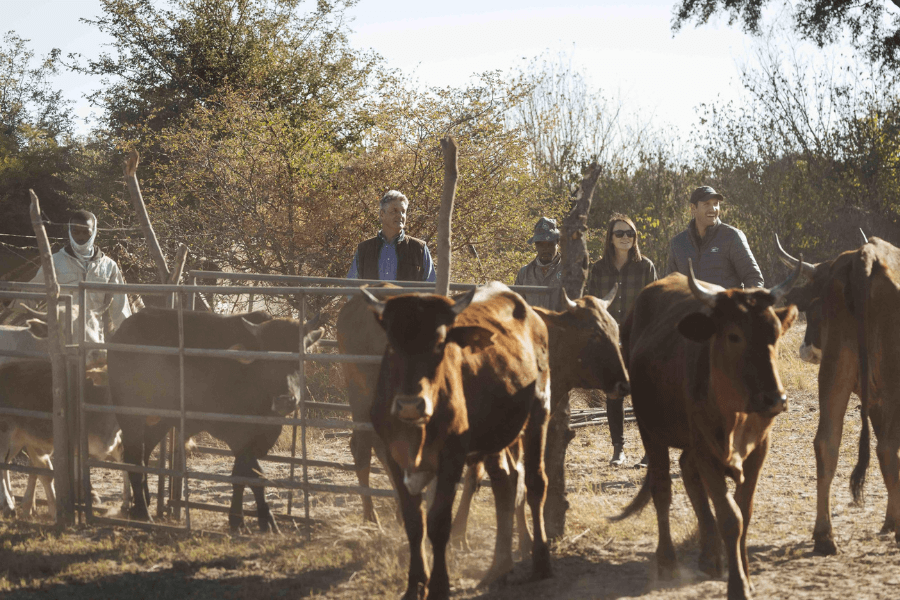
You’ll visit two places, both remote and way off the normal safari itinerary. One is trying to reduce conflict between herdsmen and big cats. Appropriately named CLAWS (Communities Living Among Wildlife Sustainably), it helps farmers protect livestock through programmes with veterinary support and land for grazing.
The other organisation concerns itself primarily with resolving human-elephant conflict, and a guided tour immerses you in traditional village life, enabling another perspective to the challenges faced in coexisting with elephants. You’ll be entertained by traditional song and dance, and will return to camp with a deeper understanding of Africa.
MAKGADIKGADI PANS
Once the bottom of an ancient super-lake, the Makgadikgadi Pans lie empty and inaccessible for most of the year, but its vastness guards a couple of startling surprises: fly by helicopter to Kubu Island, a stupendously remote rocky island that rises out of the flatness and is home to truly cosmic stargazing safaris.
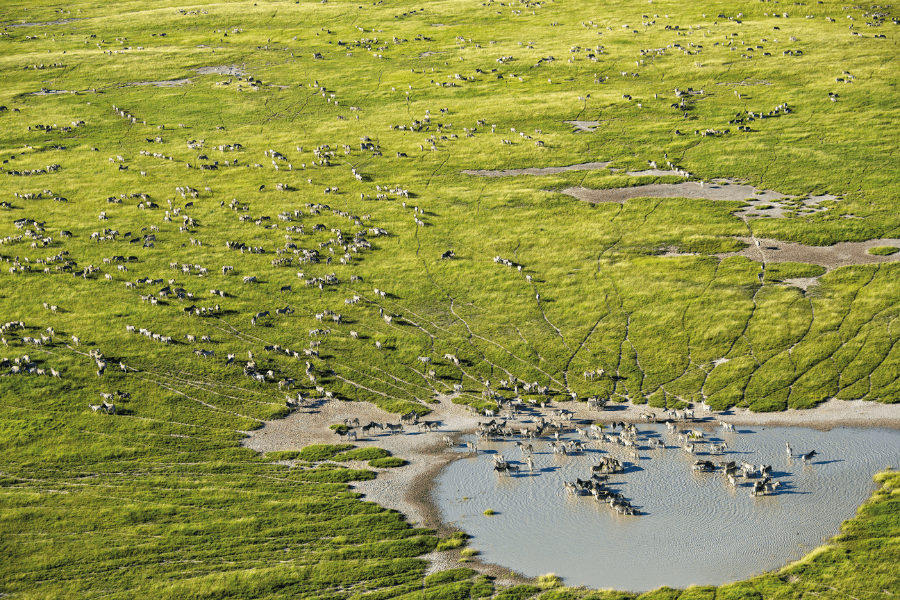
Migrating zebra and wildebeest move into the area during the summer rains, and if you have timed your visit between January and June then you may just be lucky enough to witness a rarely seen phenomenon: thousands upon thousands of flamingos, some of which have even flown from Cape Town, taking advantage of flooded conditions on the pans to feed and breed. It’d take days of driving to find them but a helicopter safari reduces the enormity of the pans – you’ll even be back in time for tea.