
Travel to Uganda Is Open Again: Here’s Why You Should Go
Is Uganda safe to travel? Following Uganda’s official declaration that the latest Ebola outbreak has ended, international travel is resuming and many visitors are once again planning gorilla safaris and East African adventures.
There are some trips that stay with you long after you’ve unpacked your suitcase.
For me, Uganda was one of them.
I had travelled there to experience some of the country’s most iconic wildlife encounters. What I hadn’t expected was just how deeply I would fall in love with the landscapes, the people, and the quiet, in-between moments that make a journey unforgettable.
First Impressions
Our journey began with a rather bumpy (and rainy!) flight from Entebbe to Kasese, where we were warmly welcomed by our incredible guides—who would soon become constant companions throughout much of the trip.
The drive to Kibale wasn’t fast. The roads are often rough and dusty, but I quickly realised that the journey itself is part of the experience.
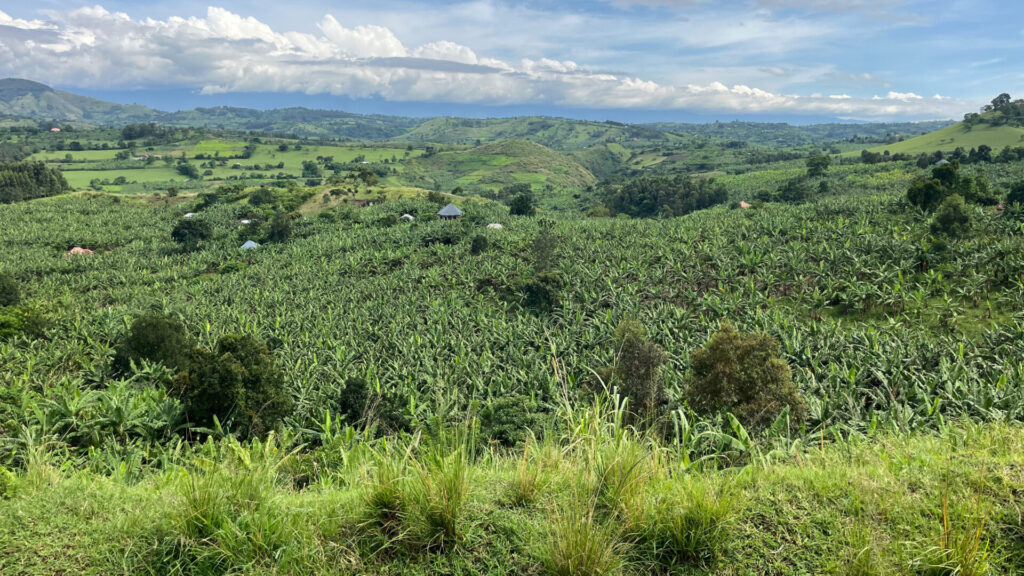
Every village we passed felt alive. Children waved enthusiastically as we drove by, bicycles were stacked impossibly high with bunches of bananas heading to market, and the countryside unfolded into a vibrant patchwork of maize, sunflowers, mangoes, sweet potatoes, and endless banana plantations.
Uganda has an energy that’s hard to describe until you’ve experienced it for yourself.
Kibale – Into the World of the Chimpanzees
Our home for the next two days was Kibale—the primate capital of the world.
Before our trek, we were treated to a fascinating talk by a primatologist from the Kibale Chimpanzee Project, who shared insights into their long-term research and the conservation challenges facing chimpanzees in the region.
But nothing could truly prepare me for the real experience.
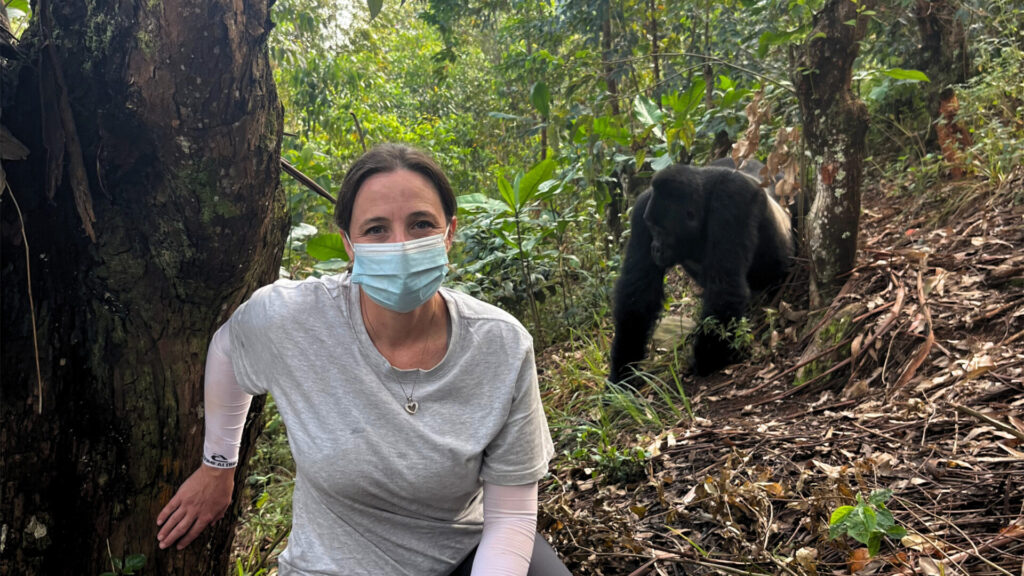
Each trek begins with a briefing—the do’s and don’ts—before you are assigned a guide and armed rangers (as the forest is also home to elephants and buffalo). Masks are mandatory when in close proximity to chimpanzees (and gorillas), as their DNA is so similar to ours that human illnesses can easily be transmitted.
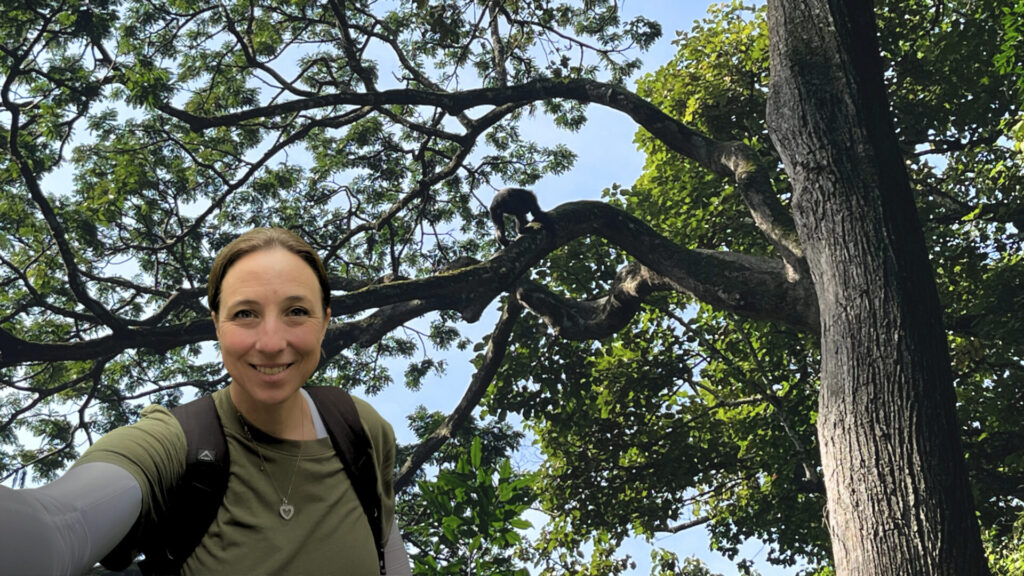
Stepping into a rainforest for the first time was breathtaking. The vegetation was dense, the terrain sometimes steep…but it was not long – then we heard them.
The calls of the chimps echoed through the forest, bouncing from tree to tree and creating an atmosphere that is impossible to capture in words. Within moments, peaceful walking turned into a fast-paced trek as branches shook overhead and chimps raced through the canopy.
If I had to describe chimpanzees in one word, it would be: chaotic.
At one point, a dominant male approached us, putting on an impressive display—waving branches, asserting his authority, and clearly making his presence known. As he passed, he lightly nudged my arm.
That moment? Exhilarating. Wild. Completely unforgettable.
Chimpanzee trekking is often overshadowed by gorilla trekking—but it shouldn’t be. It’s an entirely different, high-energy experience that absolutely deserves its place on any itinerary.
The Lost Chimpanzees of Kyambura
Our next stop was Kyambura, on the edge of Queen Elizabeth National Park.
Kyambura Gorge—often referred to as the “Lost Valley”—is a dramatic 100-metre-deep forest hidden within the surrounding savannah.
Reaching the gorge involved a scenic walk followed by a steep descent, walking sticks firmly in hand.
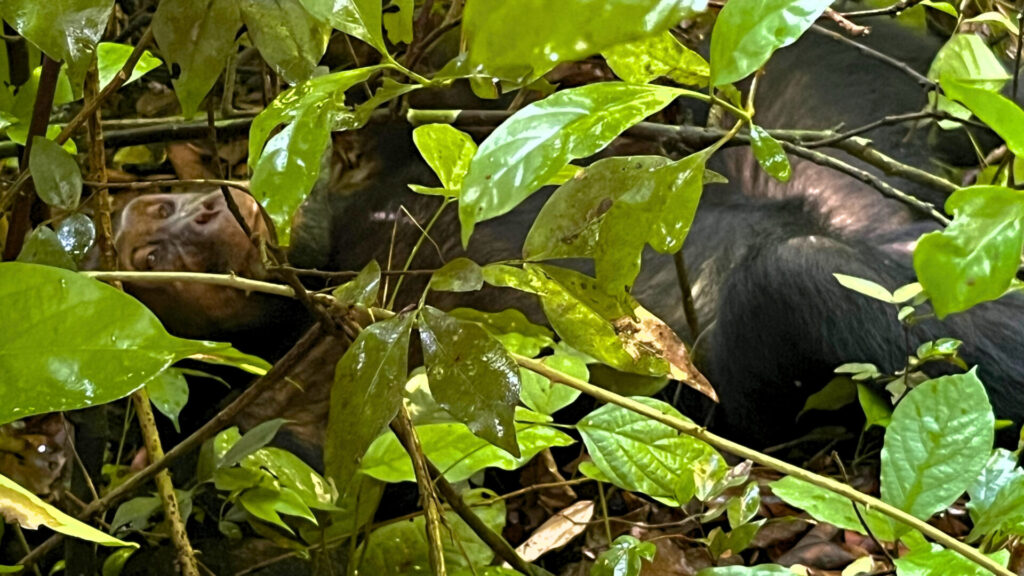
The chimpanzees here offered a completely different experience. The group is much smaller, and their behaviour noticeably calmer. Instead of racing through the trees, they rested quietly, allowing us to observe them from a respectful distance.
It was here that we also experienced a more sobering moment. During our trek, our guide discovered the remains of a chimpanzee that had recently died. He explained how chimpanzees mourn—returning to these places, vocalising, remembering.
It was a powerful and humbling glimpse into their emotional and social complexity—and perhaps an explanation for the more subdued atmosphere we experienced.
Queen Elizabeth National Park
The wildlife experiences continued with a private boat cruise along the Kazinga Channel.
Hippos crowded the water. Elephants roamed the shoreline. Buffalo wallowed in the shallows, while African Fish Eagles, kingfishers, and egrets filled the air with sound.
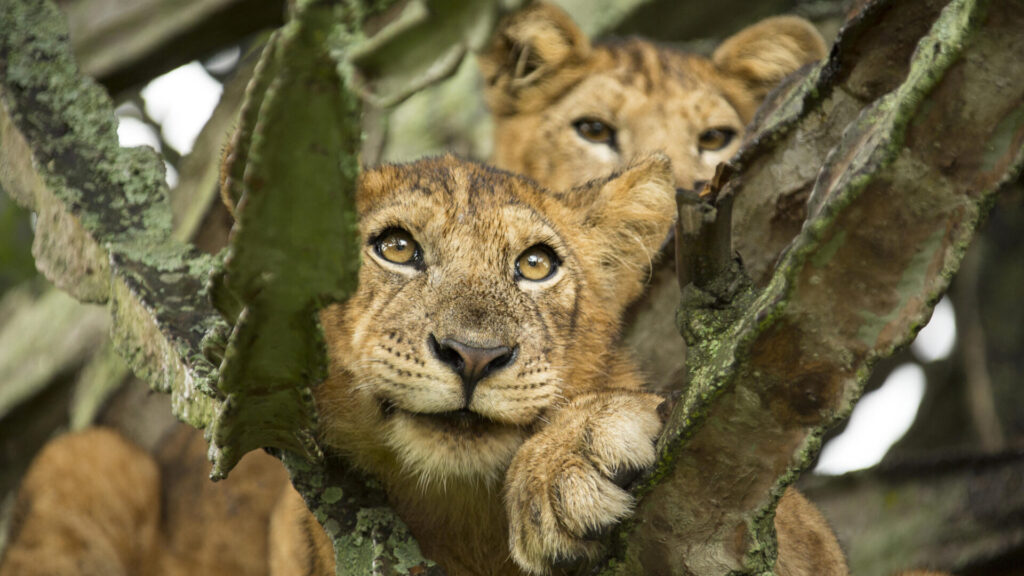
Later, we were fortunate enough to see one of the park’s famous tree-climbing lions resting high in a Euphorbia tree.
That evening, we spent time with the Kyambura Lion Monitoring team, learning about the delicate balance between conservation and community. These behind-the-scenes conversations add remarkable depth to a safari experience.
Into the Highlands – Bwindi Impenetrable Forest
Our journey continued with a six-hour drive through Queen Elizabeth National Park, including the Ishasha sector, before climbing into the misty highlands of Bwindi.
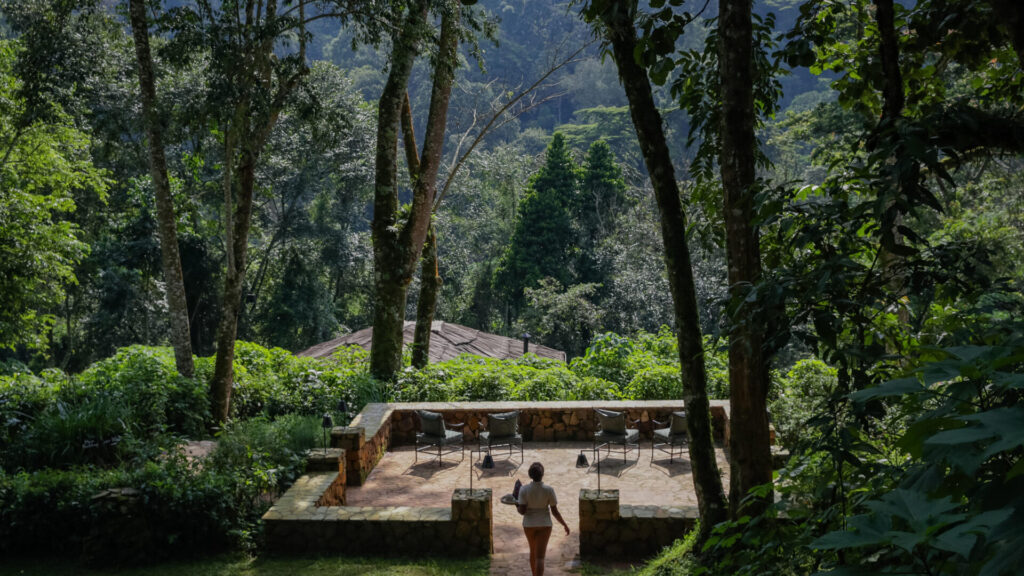
The moment we arrived, it was difficult to put the beauty into words. The forest seemed to merge seamlessly with the lodge—lush, atmospheric, and utterly breathtaking.
We explored nearby village shops, meeting members of the local community and learning about their efforts to support education and development.
Bwindi – Meeting the Mountain Gorillas
Even after hearing countless stories from clients over the years, I wasn’t prepared for the emotional impact.
Trekking times can vary significantly depending on where the gorilla families are located, but we were incredibly fortunate—after just 40 minutes, we found our group.
They sat peacefully, feeding and foraging. Youngsters tumbled over one another in playful bursts of energy. And for one extraordinary hour, we simply sat among them.
The silverback’s size was awe-inspiring—but it was his gentleness that surprised me most. There was a quiet calmness about the entire family.
At times, individuals wandered surprisingly close to us, pausing with gentle curiosity before continuing on their way.
It was one of the most humbling wildlife encounters of my life.
Conservation at the Heart of Everything
What stood out most throughout this journey was the people.
In Kyambura, we learned the traditional process of coffee making—from harvesting the berries to roasting and grinding the beans by hand. It gave me a completely new appreciation for my morning cup.
In Bwindi, we spent time with the Gorilla Doctors team, gaining insight into the vital veterinary work they do and the difficult decisions they face when working with wildlife.
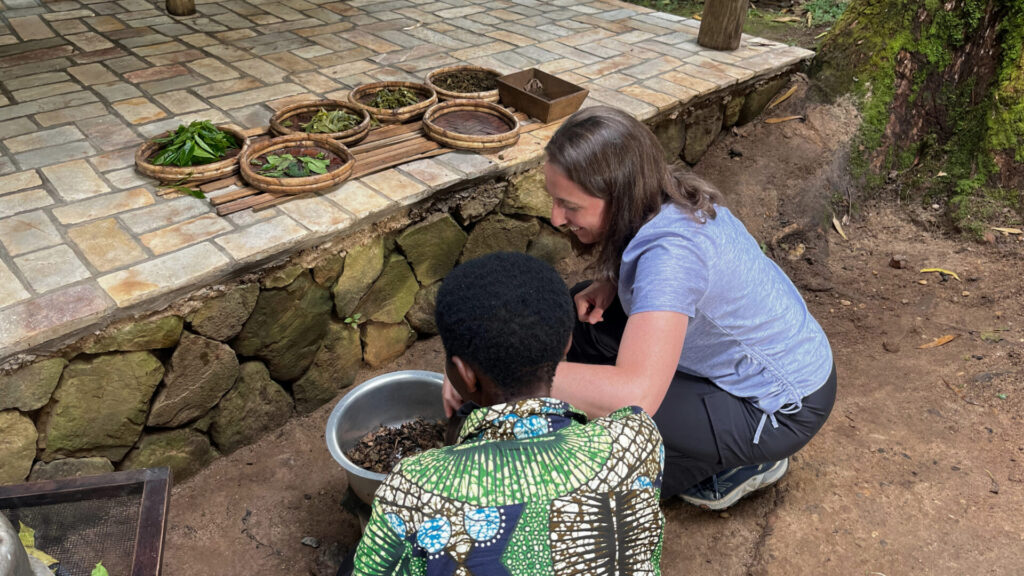
We also visited local community projects, where traditional tea-making practices were shared, and we saw first-hand how tourism creates opportunities for families living alongside these protected areas.
It reinforced something I felt throughout the trip: conservation and community are deeply connected.
Golden Monkeys & Volcanic Landscapes
Our journey continued with a flight from Kihihi to Kisoro, where our lodge was set at the foot of the Virunga Volcanoes, on the edge of Mgahinga National Park.
Here, we trekked the Golden Monkeys.
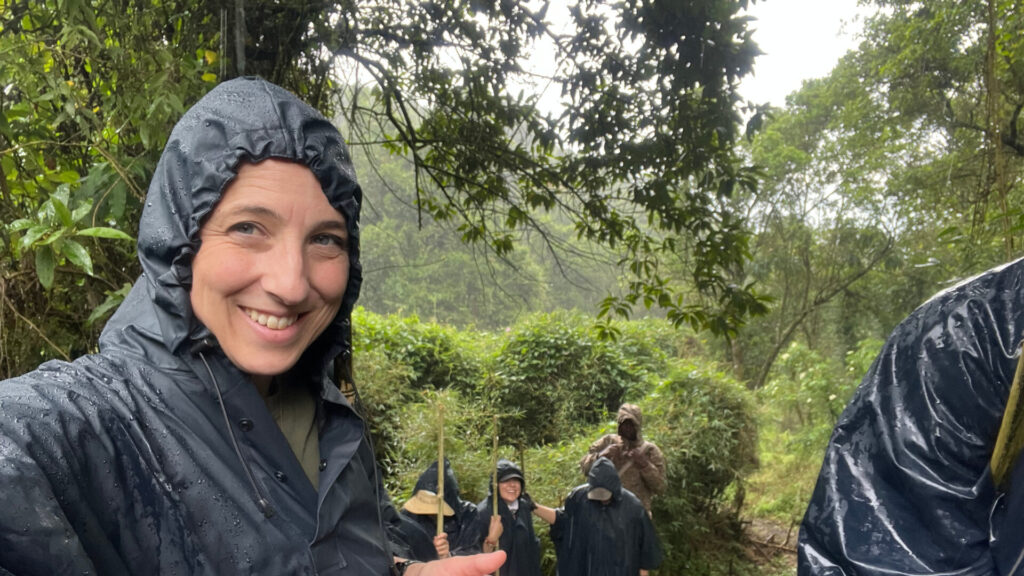
It was a challenging day—relentless rain and deep mud made the 4 hour trek to the monkeys demanding—but it was a reminder that nature doesn’t always perform on cue, and that unpredictability is part of the adventure.
The views were spectacular as we climbed, and we also had the opportunity to visit the Gahinga Batwa Village, gaining insight into traditional ways of life.
Crossing into Rwanda
Crossing into Rwanda brought a noticeable shift in landscape.
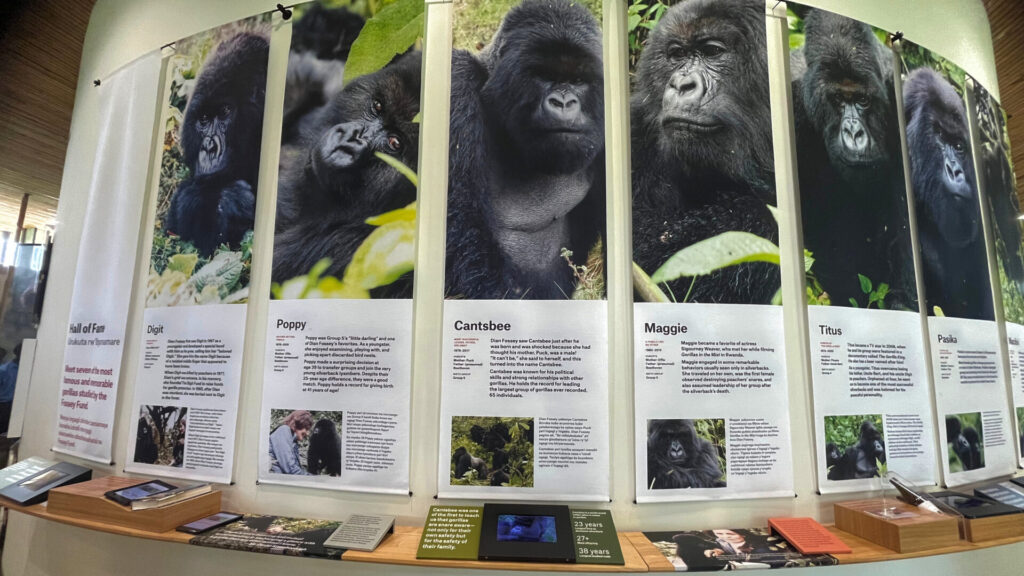
The drive was incredibly scenic, winding through terraced hillsides and vibrant villages. A highlight along the way was the Ellen DeGeneres Campus of the Dian Fossey Gorilla Fund—The interactive exhibits beautifully tell the story of Dian Fossey’s life, the ongoing conservation work and the future of mountain gorilla protection. It was one of the most impressive wildlife museums I’ve visited that deserves at least three hours to properly explore.
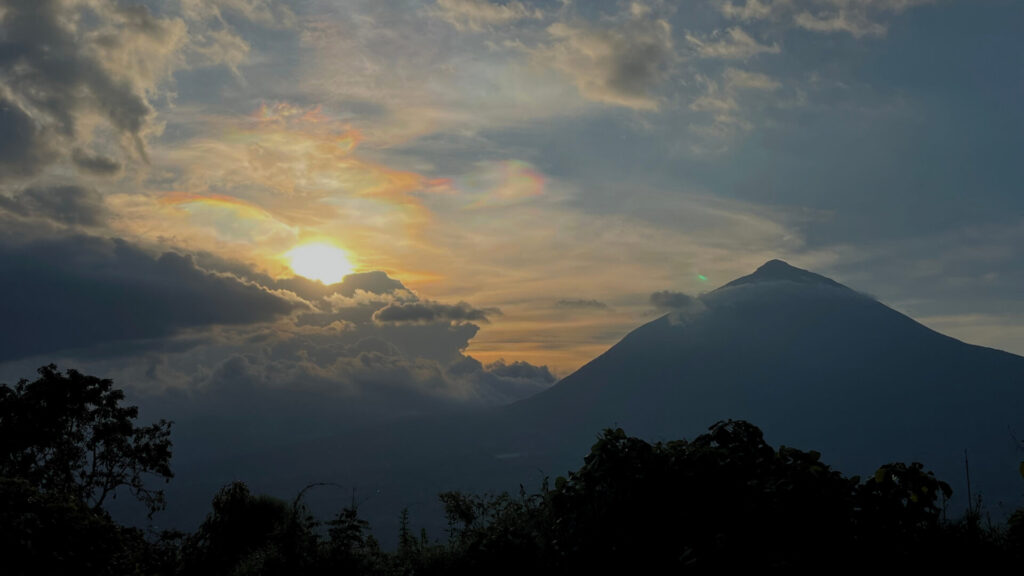
We spent a night in the Virunga region, with sweeping views of the volcanos and Lakes Bulera and Ruhondo—another personal first – The sunset here was particularly captivating With the volcanoes dominating the landscape creating exceptional photographic opportunities
While we didn’t trek gorillas here, Rwanda remains a popular destination for those looking to combine trekking experiences. Permits are more expensive (from USD 1,500 per person), and there are fewer gorilla families than in Uganda.
Kigali – A Powerful Ending
Our journey ended in Kigali with a visit to the Kigali Genocide Memorial.
It’s not an easy experience—nor should it be.
The memorial offers an honest and deeply moving account of one of Africa’s darkest chapters, while also highlighting Rwanda’s extraordinary journey of resilience and reconciliation.
It’s a visit I believe every traveller should make. Allow at least three hours to experience it fully.
Final Thoughts
One of my biggest takeaways was that Uganda and Rwanda should be viewed as stand-alone destinations, not simply as a 3- or 4-night add-on to a traditional safari. There is so much depth, diversity, and authenticity to experience that they truly deserve time in their own right.
Yes, the roads can be long and bumpy. Yes, trekking can be muddy, steep, and physically demanding. But every early start, every slippery trail, and every dusty drive fades away the moment you hear chimpanzees calling through the forest… or find yourself sitting quietly just metres from a family of mountain gorillas.
These aren’t just wildlife sightings. They are moments that stay with you forever.
Helpful Travel Tips for Uganda & Rwanda
1. Choose the right season for your trek I travelled in May during the wet season, which brought muddy trails, dense vegetation, and more challenging trekking conditions. While gorilla and chimpanzee trekking are rewarding year-round, the dry seasons (June to August and December to February) generally offer easier hiking conditions, less slippery trails, and better photography opportunities. That said, rainforest weather can be unpredictable, and rain is possible at any time of year.
2. Break in your hiking boots well before departure One of the most important pieces of advice I can give is to avoid wearing brand-new footwear on a trek. Gorilla and chimpanzee trekking can involve steep inclines, uneven terrain, mud, and several hours of walking. A comfortable, well-worn pair of hiking boots is essential.
3. Start visa applications early Apply for your visa well in advance and double-check that all supporting documents meet the latest requirements. Something as simple as an incorrect passport photo can result in delays or a rejected application. Allow extra time in case revisions are needed.
4. Bring small denomination US dollars Many lodges, guides, and porters appreciate gratuities in US dollars. Small purchases from local craft markets, community projects, and village shops often require cash as well. Ensure your notes are undamaged, and preferably issued from 2020 onwards, as older notes are sometimes not accepted. Small denominations can also be surprisingly difficult to source at the last minute.
5. Hire a porter for gorilla trekking Not because your bag is heavy, but because their knowledge of the terrain is invaluable. They guide you safely through steep, muddy sections, provide support during challenging climbs and descents. It is also a meaningful way to support local communities.
6. Pack lightweight rain gear regardless of the season Rainforests create their own weather patterns. Even during the drier months, a lightweight waterproof jacket and rain cover for your camera or backpack can prove invaluable.
7. Bring gardening or trekking gloves This is one item many travellers overlook. Treks often involve grabbing branches, roots, and vegetation for balance on steep sections. Lightweight gloves can make a significant difference and provide protection against thorns and stinging plants.
8. Carry a small daypack A comfortable daypack is useful for carrying water, snacks, rain gear, spare camera batteries, sunscreen, insect repellent, and any personal medication during treks.
9. Be prepared for varying trek durations No two gorilla or chimpanzee treks are the same. You may encounter your assigned family after 45 minutes, or it could take several hours. A reasonable level of fitness will enhance the experience and make longer treks more enjoyable.
12. Follow the health protocols seriously Masks are often required when near chimpanzees and gorillas because they are highly susceptible to human illnesses. If you are feeling unwell, it is important to inform your guide, as strict rules are in place to protect these endangered animals. Most lodges will supply a mask, but it’s always handy to have an extra one.
13. Allow time for the cultural experiences While gorilla trekking is often the highlight, some of the most rewarding experiences come from visiting community projects, conservation initiatives and cultural villages. These encounters provide valuable insight into how conservation and local livelihoods are interconnected so book an extra night and enjoy what the location can offer you.
14. Don’t underestimate travel times Road journeys in Uganda can be long and sometimes slow due to road conditions. Travel often takes longer than expected. The scenery, however, is part of the adventure.