Walking safaris feature prominently on many African safari itineraries. And they do sound amazing: on foot on big game country, led by an armed guide and tracker, feeling a physical connection between you and Africa.
But take care with your choices: there are different kinds of walking safari experiences, and for many travellers, a short guided walk around camp usually suffices. Others, however, will want a deeper immersion – a morning or a whole day spent walking. And then there’s the undeniable fact that wildlife watching is generally better from a vehicle. You cover more ground, tap into other vehicles’ sightings and – in the case of large and dangerous animals – you can get closer for photography than you would do on foot. Obviously.

So do both. Have each kind of experience on a single itinerary. Walk for a morning with a guide, tracking animals and watching birds, feeling the elements around you, and then spend the afternoon in a 4X4 vehicle on a game drive. You’ll add to the morning’s sightings the animals that you avoided earlier – elephants, lions, buffalo – and have much better chances to see shy, elusive animas such as leopards and wild dogs. The best of both worlds.

But where in the world can you do this kind of thing? South Africa is where; two different private reserves – one in the malaria-free Waterberg Biosphere and the other next to the Kruger National Park. Both are Big Five reserves (lion, elephant, rhino, leopard and buffalo) and both have a wealth of other wildlife to see. Here’s what a day on safari is like in either of the destinations.

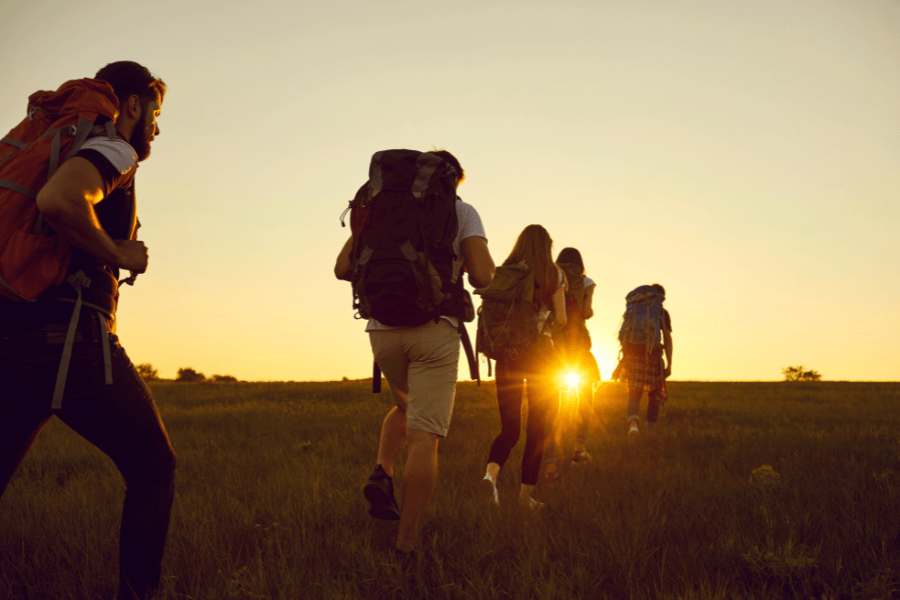
There’s no camping on these safaris: you’ll be staying in comfortable lodges and – in the Waterberg – enjoying an air-conditioned suite with its own viewing deck, plunge pool and bathroom. You’ll be woken early for coffee and breakfast before heading out on foot with a guide and tracker. Now the details begin to emerge: birds calling and foraging, insects on inscrutable missions, the signs of the wild: a rhino rubbing post, the remains of a leopard kill.

After lunch in the bush and a midday rest in the shade of a tree, you’ll walk back to camp where a 4X4 vehicle waits to take you on an afternoon drive, filling in the gaps from the morning, letting you get close to the big animals, and of course finishing with cold drinks and a sunset.

And depending on the itinerary you choose, there’s the chance of a sleep-out too. The real-deal kind of sleep out: cooking on an open fire, using bed rolls and mosquito nets, and everyone taking a turn to stand watch.

When to go and what to take? The second question is easy: almost nothing apart from your walking clothes, sunhat and good shoes. All meals are included and you’ll be supplied with a personal back-pack and hydration system plus hiking poles if you need them. Leave behind the white T-shirts and brightly coloured clothes and bring neutral colours to wear: beige, green, brown.
As for when, walking safaris are considered best in the dry winter season – May to October. The malaria risk in the Kruger is at its lowest and wildlife is concentrated around water sources, making viewing much easier. Temperatures are cool to warm in the first part of winter (bring warm clothing) but very hot in September and October.

But don’t discount the possibility of walking safaris in the summer months – November through April. You may get some rain – you may not – but the landscape is green and fresh with many animals giving birth at this time. The birding is superb – many migrant species have arrived and are breeding – and you’ll also enjoy the financial benefits of out-of-season rates.
Aimed at couples, groups of friends and older families, these walking safaris have an age restriction of between 16 and 65 and although you don’t need to be Iron-Man fit, you do need to be able to walk comfortably for half a day. Accessed easily via Johannesburg’s OR Tambo Airport, the Waterberg is only a couple of hours by road transfer but you may want to consider avoiding the longer drive to the Kruger and fly direct to Hoedspruit on the edge of the national park.