Since you’ll be spending much of your time sitting in one, it pays to know what kind of vehicle you can expect on your East Africa safari. Rugged and with four-wheel drive obviously, but what about ease of viewing and comfort? Travellers to Southern Africa wildlife destinations will be familiar with the open-sided design of safari vehicles in places like the Kruger and Botswana but it’s a little different in East Africa. There are open-sided vehicles but also closed ones and specialist photographic vehicles too – it depends what type of safari you are on. East Africa includes Tanzania, Kenya, Uganda & Rwanda.
CLOSED SAFARI VEHICLES IN EAST AFRICA – OVERLAND SAFARIS
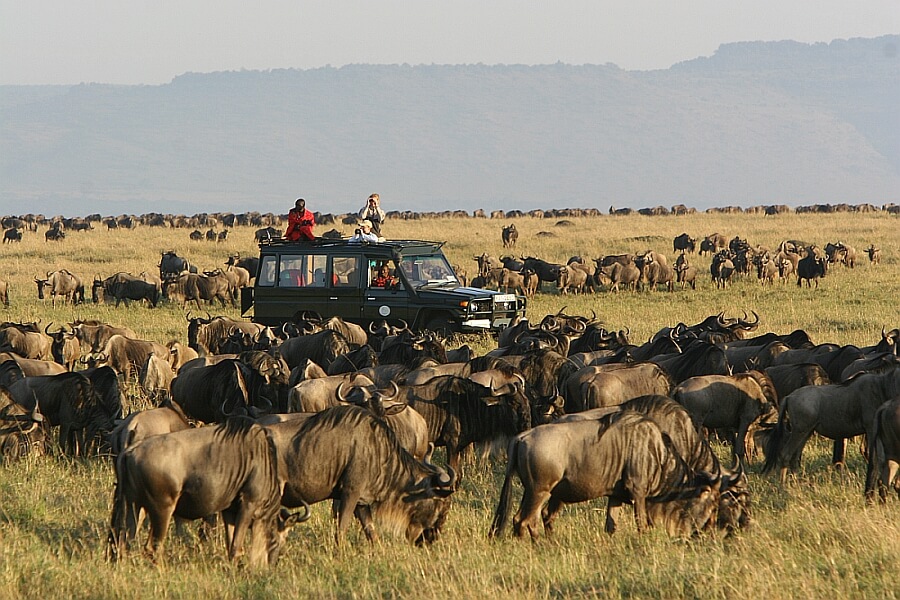
If you’re on an overland safari – starting in places like Arusha or Nairobi – then you’ll be buckling up in a closed-sided vehicle with a driver/guide with you all the way. Closed vehicles have to be used on overland tours as you’ll be on public roads – which is incidentally a great way to see more of the country and learn a little about local life.
A closed vehicle doesn’t mean there’s no view: these vehicles have large passenger windows and a pop-open roof so you can enjoy wildlife viewing without hindrance. Complete with on-board fridge and charging stations for phones and cameras, a closed safari vehicle is also one you’ll appreciate if tsetse flies are present – simply close the windows.
Once in the reserves, the driver/guide is with you on your safari activities but gets time off afterwards. They don’t have dinner with you but meet you again the next morning after breakfast – it’s a tried-and-tested formula and works well.
A closed vehicle is a great option to keep costs down: you save on the flights between lodges and with four to six travellers per vehicle you can split vehicle costs too. Go one step further and make an exclusive booking – now you have your own private guide and vehicle for you and your friends and family; it’s highly recommended for families with younger children.
All our safari partners use 4X4 Land Cruisers, still first choice for this kind of business.
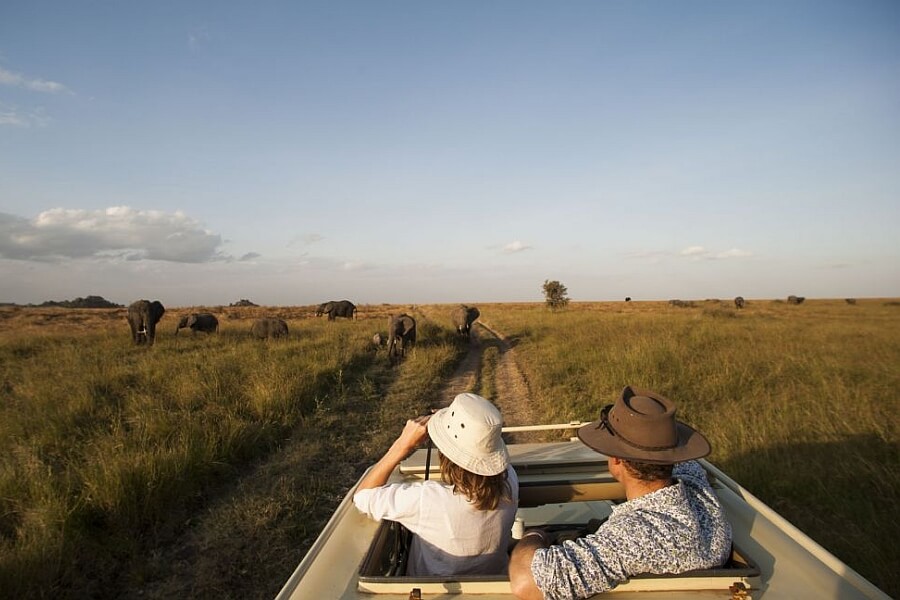
OPEN-SIDED VEHICLES ON GAME DRIVES – FLY-IN SAFARIS
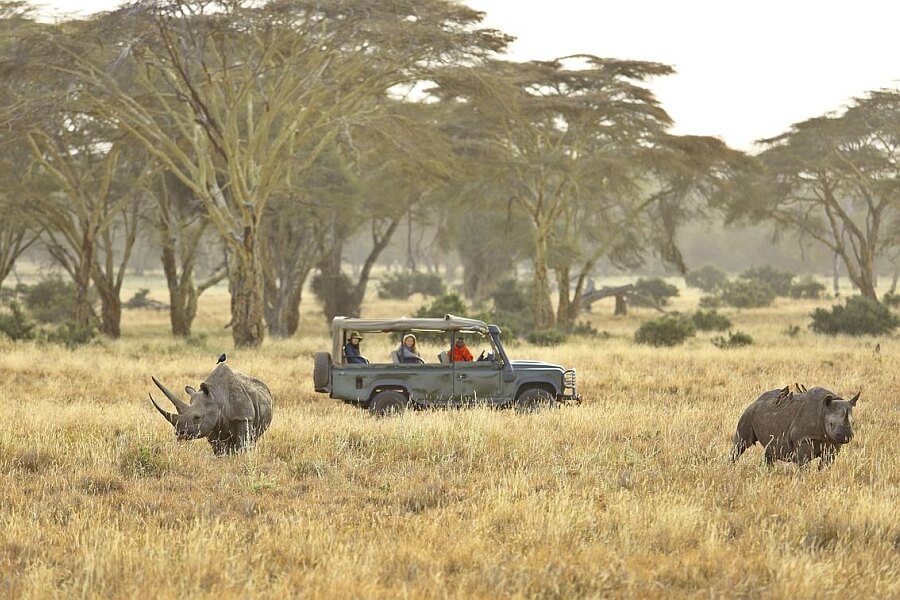
Flying from camp to camp? Then it’s the open-sided vehicle that you’ll be using. A guide from the lodge leads the safari activities and since they are based in that area their local knowledge is usually exceptional, especially when it comes to finding the best game sightings.
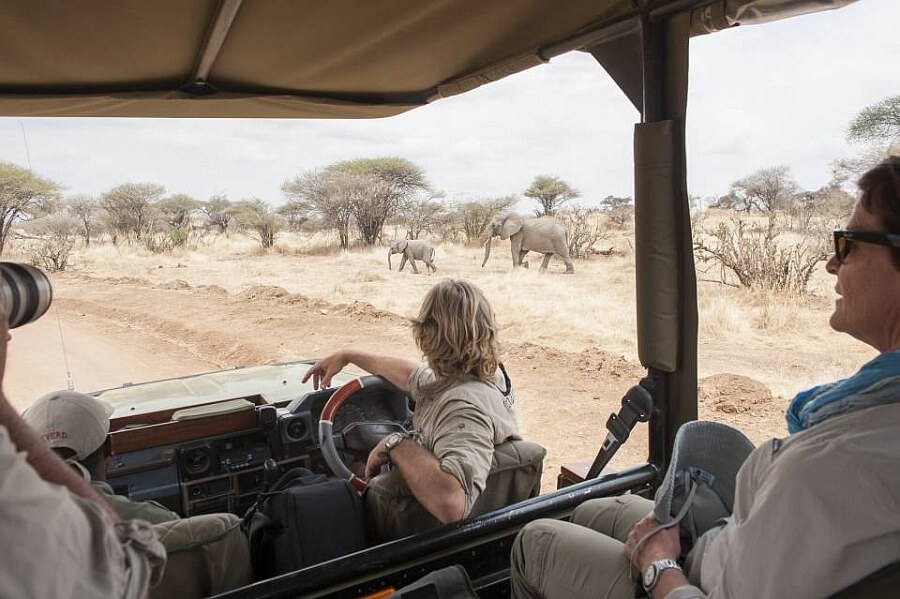
Open-sided vehicles are specially adapted 4X4s such as Land Rovers or Land Cruisers. A canvas roof shields you from the sun but the sides of these vehicles are open with a guard rail and roll-up canvas sides for wet weather. There are usually three rows of bench seats that get higher as they go back to give everyone an unobstructed view. Vehicles have pouches and pockets for your books and binoculars as well as all the essentials like a cooler box for drinks and snacks.
It’s the classic way to view and photograph wildlife: there is sometimes literally nothing between you and the animals – a more sensory to experience the wilderness. If you’ve been on safari in Southern Africa and enjoyed the freedom of their open-sided vehicles then these ones will give you a similar experience.
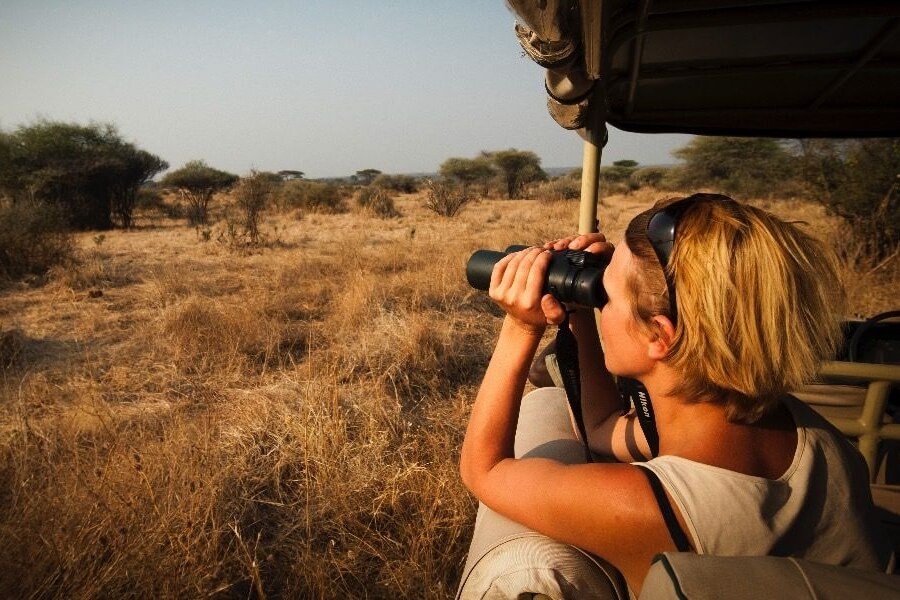
PHOTOGRAPHIC SAFARI VEHICLES IN EAST AFRICA
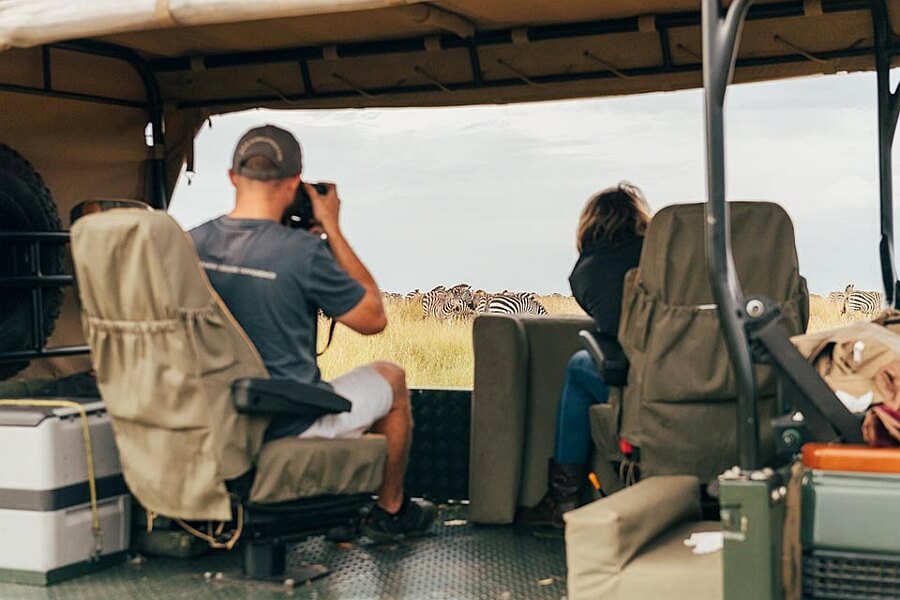
Looking for the best photographic platform for your East Africa safari? A new generation of safari vehicles has arrived, based on the classic open-sided vehicle but with custom-built features for serious photographers.
Vehicles have only three seats, each able to swivel 360 degrees. The sides of these vehicles drop right down so you can lie on the floor of the vehicle (on a padded mat) and get great low angle shots. And since the sides are completely open and there are only two bars holding the canvas roof, you’ll enjoy unobstructed photography from almost every angle. Any better and you’d be on foot.
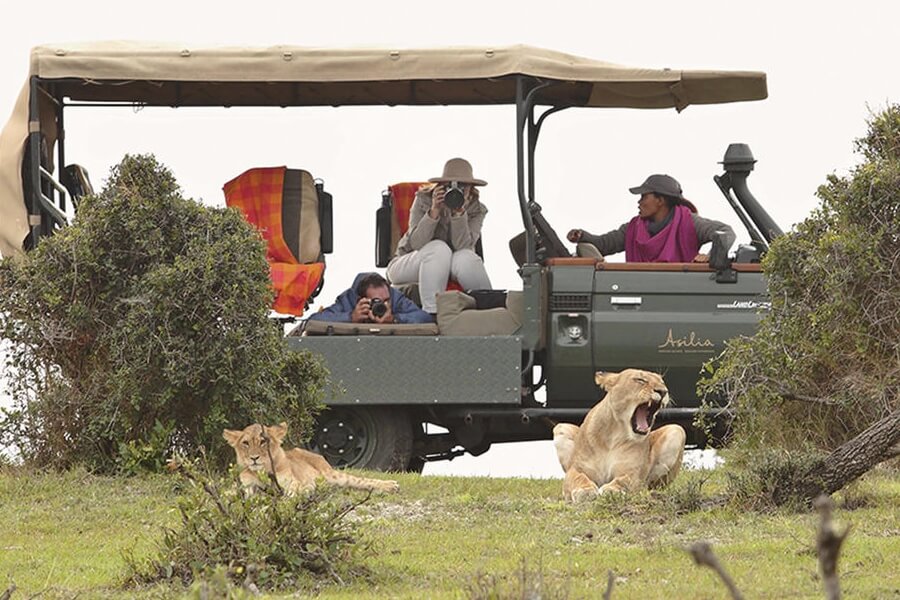
You’ll find the usual conveniences on board – fridge and battery charging points – plus great photographic extras: beanbags and foam camera rests (bring your own tripods). Offered only at certain lodges in East Africa, a photographic safari vehicle gets you eye to eye with wildlife – it’s simply the best way to maximise your photographic experience.