If you’re coming to Cape Town, then the chances are that you’ll be planning to visit Table Mountain. And why not? Standing 1000 metres (3500 feet) above the city, Table Mountain commands astonishing views over a mesmerising landscape, and it is covered in a unique, flower-filled vegetation called fynbos that attracts naturalists from all over the world like a magnet.

To reach the summit of Table Mountain – or at least its famously flat ‘Table Top’– you have a big choice to make: hike up and take the cable car down, or take the cable car up and down? If you want to hike up, you have two possible routes plus a range of Plan B hikes if the weather dictates. If you’d like the cable car up and down, then your experience depends entirely on the weather, and if the cable car is running then you’ll need to play it smart about tickets and queuing.
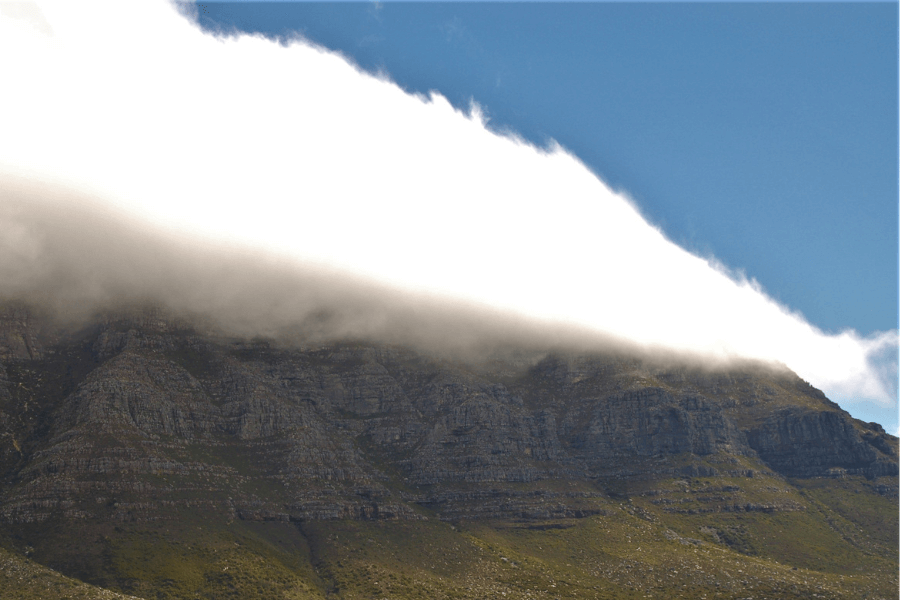
I’ll discuss both options in a moment but I’d better start with this: Table Mountain is covered in cloud for an average of 182 days a year. Yes, your maths is right: that’s half the year. Often, the clouds are created by strong ocean winds and collect on the mountain to form its famous ‘Table Cloth’ – a windy, soggy nuisance for hikers and sightseers but a fundamental cog in the local ecology. Most problematic for us is that these strong winds force the cable car to close, and it’s most common in summer.
Cloud cover – and strong winds – are things that don’t change throughout the year. Clouds can obscure the mountain in mid-summer or deep-winter but happily, Table Mountain can be visited at any time of year as long as the weather on the day permits. Summers are not hot enough and winters not cold enough to close the mountain (but note that the cable car shuts down for annual maintenance, usually in July).
Bottom line: it pays to be flexible when in Cape Town – if you see the mountain is clear, go for it!
So how do you go for it? Hike or cable car? And what is there to see up there apart from the views? Let’s start with a hike.
HIKING UP TABLE MOUNTAIN
Assuming you want to reach the Table Top, get the cable car down and be done by lunchtime, then you have two routes to choose from, only one of which I would recommend that you do unguided. This is Platteklip Gorge and it is a relentless uphill trail that zigzags its way up a great big crack in the mountain. It is touted on social media as the ‘easy’ way up but easy is the wrong word: it is the most direct, non-technical way up. You just walk uphill on stone steps for between two and three hours – there’s no climbing or rock scrambling.
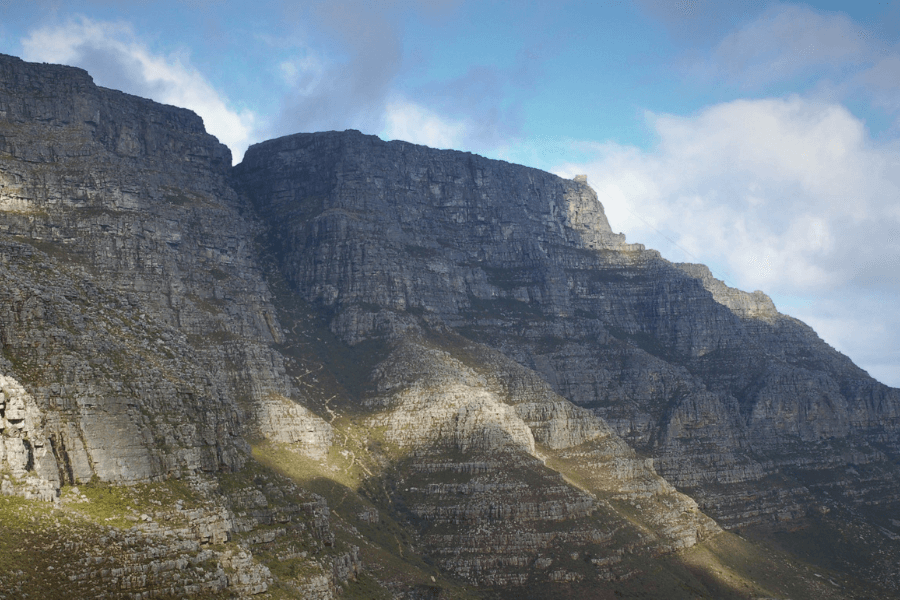
Which brings me to the second route: India Venster. This is by far superior to Platteklip Gorge in terms of views and vegetation BUT do not attempt this route without a professional guide. There are rock scrambles to negotiate and climbing routes to avoid. Both trails summit at the same place – the top of Platteklip Gorge – and you turn west for the 10-minute walk to the cable car.
There are other ways to the Table Top as well as superb half and full-day hikes all over the mountain but you will need a guide for these. And hiring a guide makes a lot of sense if you have to deal with a mountain covered in cloud and/or the cable car not running. Time for a Plan B, and that is where local knowledge is vital: many parts of the mountain range can be hiked when Table Mountain cannot.
CABLE CAR UP & DOWN
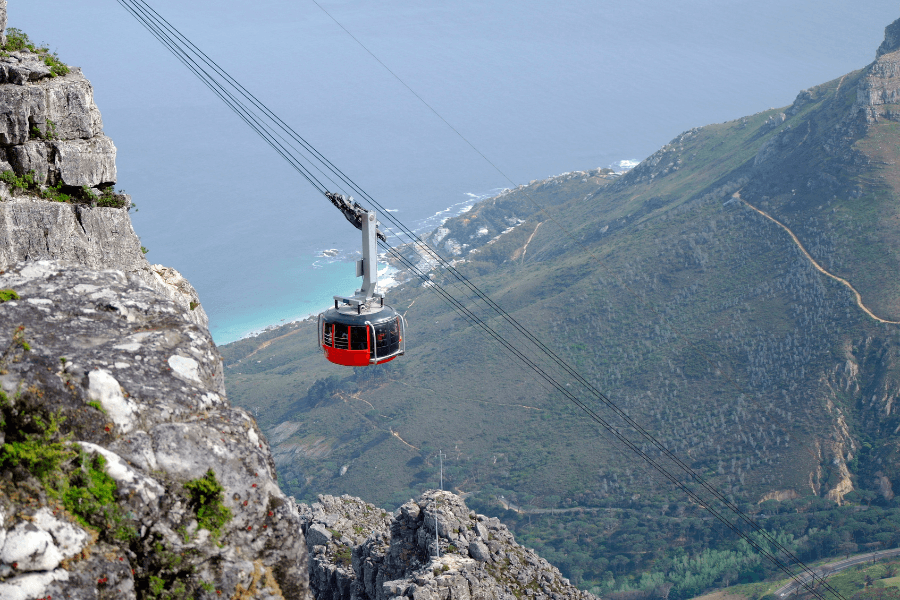
Two kinds of people take the cable car up and down: those who know they, or people with them, can’t hike up and those who want to walk on Table Mountain but without the big uphill to get there. Both groups are well served by the cable car: it gets you to the summit in a couple of easy minutes, and gives you access to the Table Top, which is over a mile of flat terrain with panoramic views in every direction.
My advice is to move away from the cable car station and walk eastwards. The crowds immediately disappear, and if you walk across to the far side, then you’ll probably have the views to yourself.
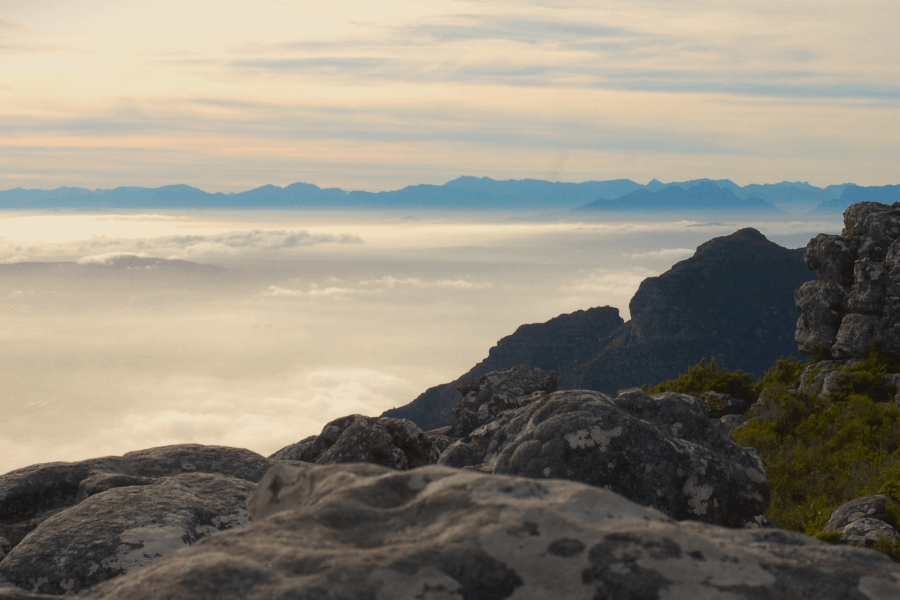
But you have to get up there and that can be challenging on a sunny day, especially after bad weather. The cable car is extremely popular and the queue may be several hours long in peak season. So, here’s how to play it smart: you could pre-book tickets online, but that doesn’t mean you won’t queue, and you also don’t have flexibility if you need to change days. It is obviously wise to get there early on predictably busy days, but the cable car runs until the early evening in summer – you have plenty of time later. Just don’t arrive mid-morning on a nice day.
And if you really want some insider information, my advice to those visiting at a busy time or caught in a bottleneck, then pay the price of a fast-track ticket. It’s twice the cost of a standard ticket but you skip the queue and walk to the cable car via private access. You’ll thank me for it.
WHAT WILL I SEE ON TABLE MOUNTAIN?
Once you have had your fill of the views – looming mountain ranges, the Indian Ocean, the Atlantic Ocean – your attention will be drawn to the extraordinary plants – and their supporting animal cast – that lie at your feet. Familiar botanical names – proteas, orchids, heathers, reeds – form an ecological partnership with bejewelled sunbirds and crocodile-like crag lizards to create the fynbos biome, and although animal life is limited on the mountain, it is unique and often colourful.
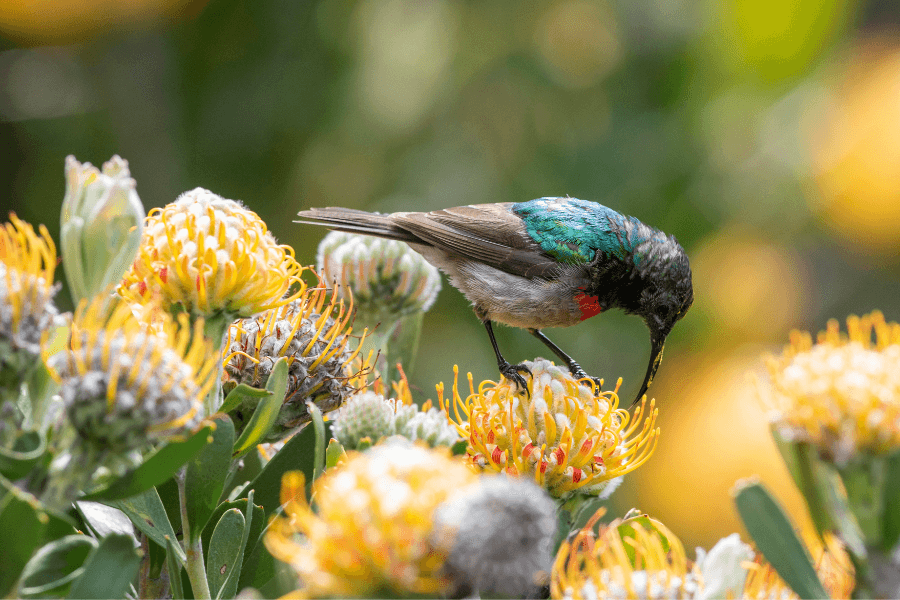
And again, by hiring a qualified guide, you’ll have this subtle natural world opened up in front of you; who would think that there are more types of plant on Table Mountain than there are in the whole of Sweden? Or that its orchids are infamous for impersonating other flowers? But I’ve said too much already: time for you to find out for yourself.