
Tanzania Safari – Northern or Southern Circuit?
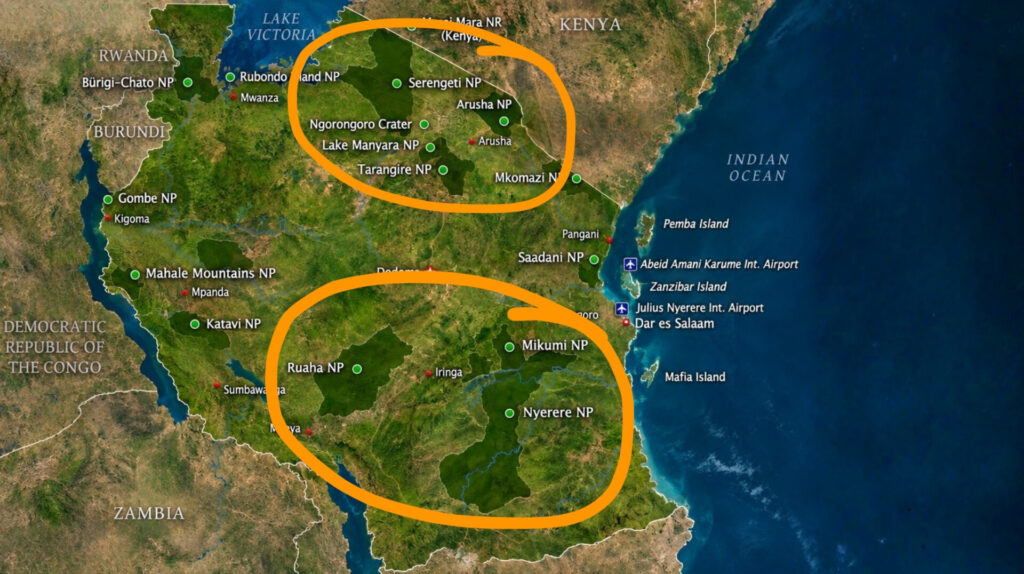
The largest country in East Africa, Tanzania makes going on safari easy by dividing into two regions: the northern circuit and the southern circuit. Together, they offer some of the best wildlife reserves in Africa – the Serengeti, Ruaha, the Ngorongoro Crater – as well as amazing wildlife experiences: the wildebeest migration, Big Five viewing and chimpanzee trekking.
And while it is possible to put both circuits on one itinerary, most safari travellers make the time and financial choice of one over the other. Both circuits deliver classic wildlife and scenery, but they are also quite different to each other. If you’re planning to visit Tanzania, here’s what you need to know about the northern and southern safari circuits.
North vs South: Wildlife
The northern circuit leads the way with its awesome array of wildlife destinations: the Serengeti – home to the Wildebeest Migration – and the Ngorongoro Crater with Big Five viewing. There’s also Arusha National Park with views of Mount Kilimanjaro, Tarangire with its famous tree-climbing lions, and flamingo-covered Lake Manyara. Animals in the north are more accustomed to visitors and, because wildlife is more concentrated in smaller reserves, animals are generally easier to see and photograph.
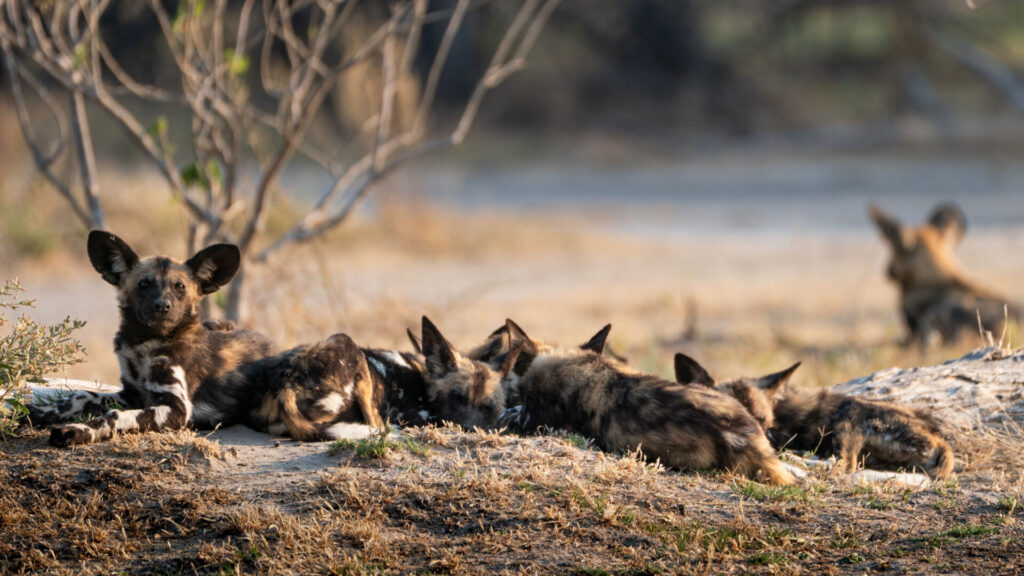
The southern circuit has bigger, wilder destinations: Ruaha, Katavi and the largest national park in Africa – Nyerere (formerly the Selous). It’s thicker vegetation with big winding rivers and animals here are no less impressive. Spanning both southern and East African habitats, Ruaha National Park is especially diverse with East Africa’s biggest elephant herds as well as 10% of the world’s lion population; Nyerere meanwhile is home to the highest concentration of African wild dogs on the continent.
It’s important to note that game drive vehicles on the northern circuit tend to be enclosed with large windows and roof access; vehicles in the south are more like in southern Africa: open-sided and open-roofed for maximum views.
Animals in the south are, however, less habituated to visitors and given the size of the parks, wildlife watching is harder than it is in the north. Take cheetah for example: Ruaha National Park has the country’s second biggest population of them but they are much easier to see on the open plains of the Serengeti.
But the southern circuit has a couple of things that the northern does not: more water-based activities and walking safaris for one, and rainforest reserves with chimpanzees for another. Now you can add a new set of animals and birds to your experience – there are several other primate species as well as chimps – as well as semi-aquatic antelope, forest birds and hippo.
North vs South: Accessibility
The northern safari circuit is the easiest to access and travel around on. The key destinations (Serengeti, Arusha, Ngorongoro) are close together (indeed, they are a contiguous ecosystem) and you have the option of transferring by road or air between your accommodation. Most safari itineraries build a night at either end of the trip in Arusha, the entry point to the north.
And while access to the southern circuit is traditionally seen as more challenging, there is a big difference between the harder-to-reach places like Mahale and Katavi, and the southern destinations of Nyerere, Ruaha and the Southern Highlands. The latter are well connected with Dar es Salaam and the Indian Ocean islands by daily scheduled flights, and in fact international flights to Dar es Salaam and Zanzibar are more plentiful and cheaper than to Kilimanjaro and the northern circuit.
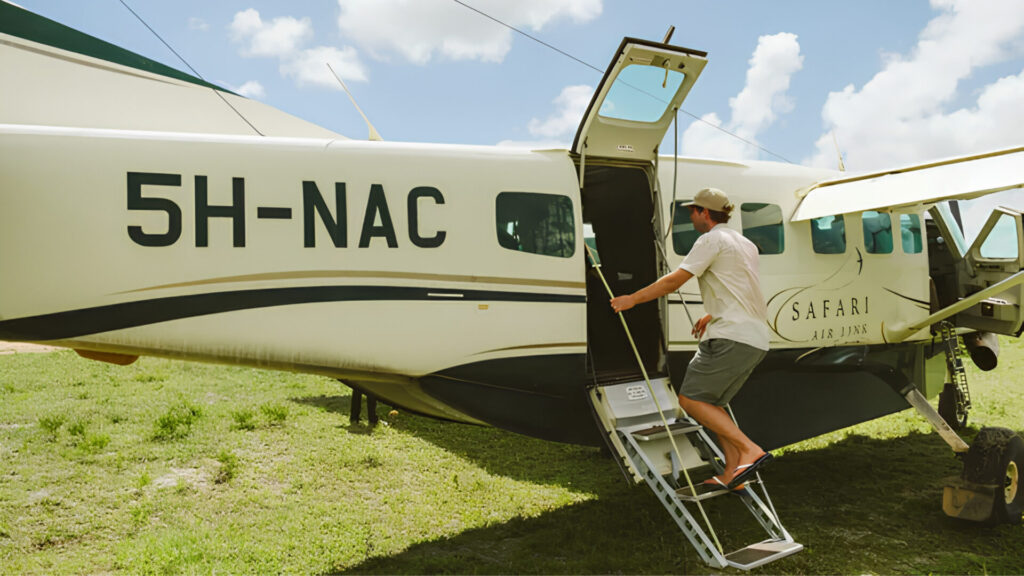
To save time when travelling between southern camps, you’ll forgo overland travel and instead use charter aircraft; the truly remote destinations – chimp-trekking lodges in the Mahale Mountains and Rubondo Island – can only be reached by aircraft and then boat.
Relative proximity to the coast and the Dar es Salaam connection does make it easier for those on the southern circuit to travel to Zanzibar Island which works well as either the start or end point of a safari.
North vs South: When to Go
The northern safari circuit can be visited at any time of year, though it depends on your requirements for comfort, what wildlife expectations you have, and how many other visitors you want to share the landscape with.
Peak season is June through October: it has the driest, mildest weather, the lowest malaria risk, and some of the easiest wildlife viewing since animals are concentrated around water sources. There will be many other visitors however and potential crowds of vehicles around key sightings (big cats for example).
But the wildebeest migration enters Tanzania’s northern circuit only with the rains of November and December, and then stays there until around June, providing much drama on the green grasslands. Rains are heavy in March, April and May however, and this time is not recommended for a first-time safari.
The question of when to go to the southern circuit is much easier: the June to October dry season, and even though it is peak season, there will be few other visitors. The November to February period is also worth considering: rains have begun, migrant birds arrive, the landscape erupts into greenery and by February the southern rivers are flowing strongly, adding to the experience.
You may want to avoid March through May: rain in the south can be very heavy, infrastructure is limited and usually overwhelmed, and while Ruaha National Park is still viable at this time of year, lodges in other destinations often close down until the return of the dry season.
North vs South: Costs & Booking
Easier to access, a competitive market and with options for vehicle-based safaris, the northern safari circuit will generally be less expensive than the southern circuit that relies so much on flying between destinations. It’s also simpler to have a shorter itinerary on the northern circuit – to pack as much in as possible! – as there is less travel time involved.
The problem comes with booking; if you want to visit the northern circuit at a prime time of year, you’ll need to book 12 months ahead – even more is recommended if you want to secure the accommodation you want for the biggest wildlife event of all: the River Crossings during the wildebeest migration. There’s not nearly the problem for booking safaris in the south, and you’ll be able to put together a safari in a hurry far better in the south than the north.
North vs South – the Final Word
If you are first-time safari traveller, choose the northern circuit, and it’s just as good for those who have been on safari before, but if you want something different, away from the crowds, with a wilder, more authentic feel, then you can’t beat the southern circuit.