
Wait; doesn’t Botswana’s Okavango Delta flood every year? That’d seem like a good question unless you are currently an Okavango local, watching the rising waters in astonishment. Something is happening – a once in a generation event – and if you are going to the Okavango Delta this year, you need to know.
In normal years, the floodwaters arrive from Angolan highlands in May or June, and double the size of the permanent wetlands by August, after which water levels drop quickly. But this year, a combination of a very wet previous year and heavy local rains of this one, mean that the Okavango Delta was already saturated and at peak size well before the floods began to arrive. And – to complete the picture – it turns out that these floods are among the highest recorded.
The result is extraordinary. The flood is not a tsunami; there are no waves – just a silent seeping of clear water into runnels and dips in the land, a spread of silver across flat plains. More and more water comes – forgotten rivers start to flow, termite mounds turn into tiny islands, larger islands become places of refuge for bigger animals. It’s like nothing else before.
But what does it mean for travellers to the Okavango Delta this year? Perhaps it is best described as preparing yourself for something different, but something exceptional. Here’s how.
Getting Around
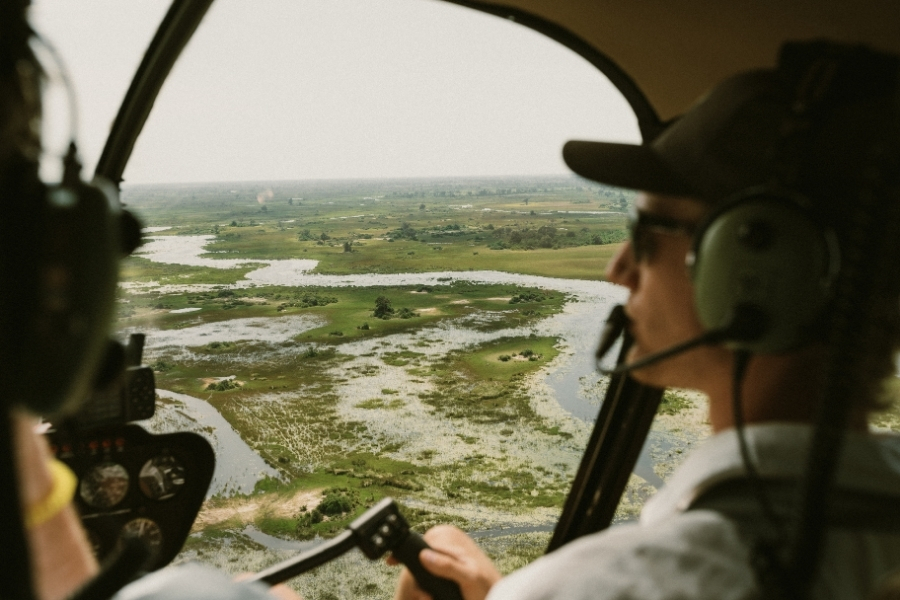
Flying into Botswana and landing at Maun, the logistics hub of the Okavango Delta won’t be a problem – it’s an international airport and the floodwaters pass by in the local Thamalakane River.
Most Okavango Delta camps are water-based anyway, and accessible by boat; this may be more of the case now as several local airstrips are underwater. You may, however, have to use a boat transfer, or even a helicopter transfer, from one camp to another if a road transfer had been planned; many roads in the area are obviously unusable.
Wildlife & activities
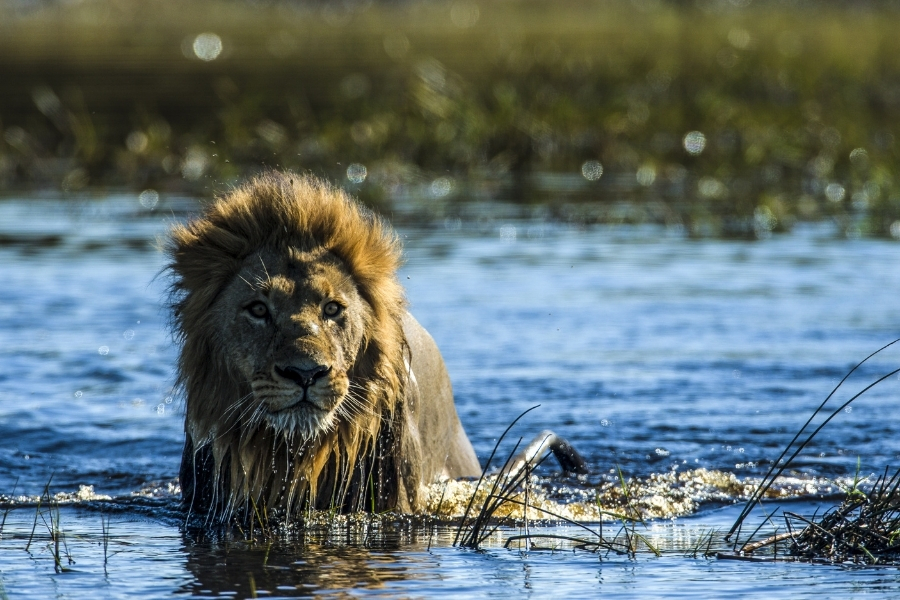
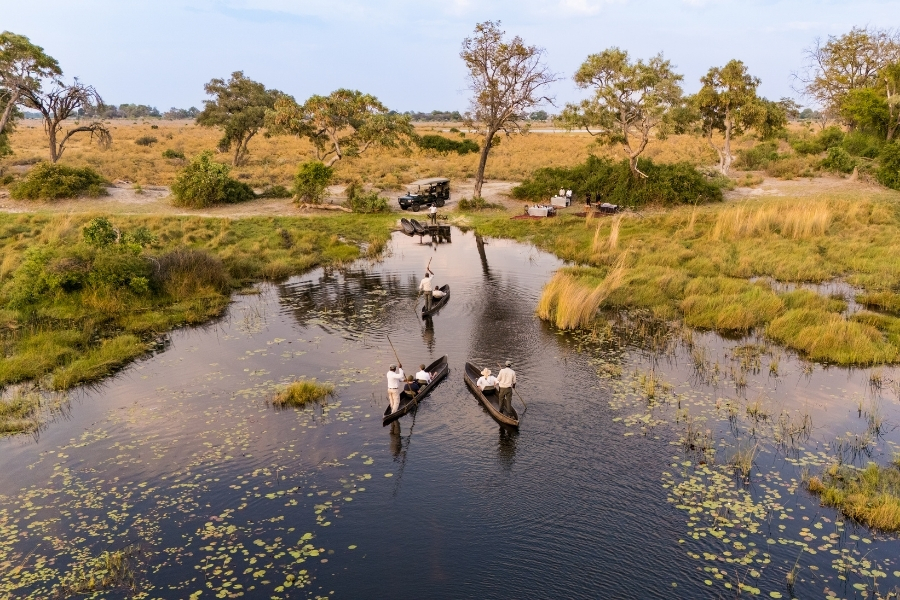
Camps and lodges set deep in the delta generally offer water-based safaris so you’ll have no change there: exploring by motor boat and traditional canoe (mokoro). But it’s the accommodation on the edges of the Okavango Delta and in the adjoining Moremi Game Reserve where activities will have to adapt. There will be less driving at some lodges, and more water-based game viewing – and this promises to be an epic year for boat safaris.
Wildlife is responding to the new situation: some animals move to drier regions but most remain and take advantage of changed conditions: grazing herds of buffalo and antelope move onto wet grazing areas, others concentrate on the remaining dry islands – both attract predators: the Okavango’s lions are powerfully built to hunt in shallow water, while African wild dogs chase antelope across the floodplains.
Malaria
With all this water around, it’s natural to wonder about malaria – will there be a greater risk due to the exceptional floods? The answer depends on two things: where and when. If you live in the local towns and villages and don’t take appropriate precautions, the answer will be yes.
But in your case, staying at remote lodges with an exceptionally low population density, the answer is no, especially given that the risk of malaria really only manifests itself in the latter half of the summer months: January through April. If you are travelling to the Okavango Delta between June and October, the risk is very low given the mild temperatures and aridity of the climate.
Bottom line? The Okavango Delta will be different this year – maybe this is the start of a new cycle – but it’s never been seen before; go and be part of the experience.